


Squeaky Brakes Fix in Houston: Find the Cause and Next Step
A squeal doesn’t always mean your brakes are failing, but a steady squeak deserves attention. Occasional noise can come from moisture or debris; persistent squealing may mean the brake pads are worn, while grinding can signal more advanced wear. A squeaky-brakes fix in Houston starts by finding the cause, not guessing from the sound alone.
It’s natural to wonder whether you can keep driving or whether the noise points to worn pads, a rotor problem, or a caliper that needs service. This guide explains what common brake sounds can mean, which warning signs need prompt attention, and how an inspection helps determine what to do next. You’ll also learn how Houston’s stop-and-go traffic puts frequent demands on brakes, so you can make a clearer, safer decision about your vehicle.
Table of Contents
Can I drive in Houston with worn brakes?
A brief squeak doesn’t always mean your brakes are unsafe, but grinding or reduced stopping ability needs prompt attention. In Houston’s stop-and-go traffic, noticing changes early is especially important.
Risks of Continued Driving
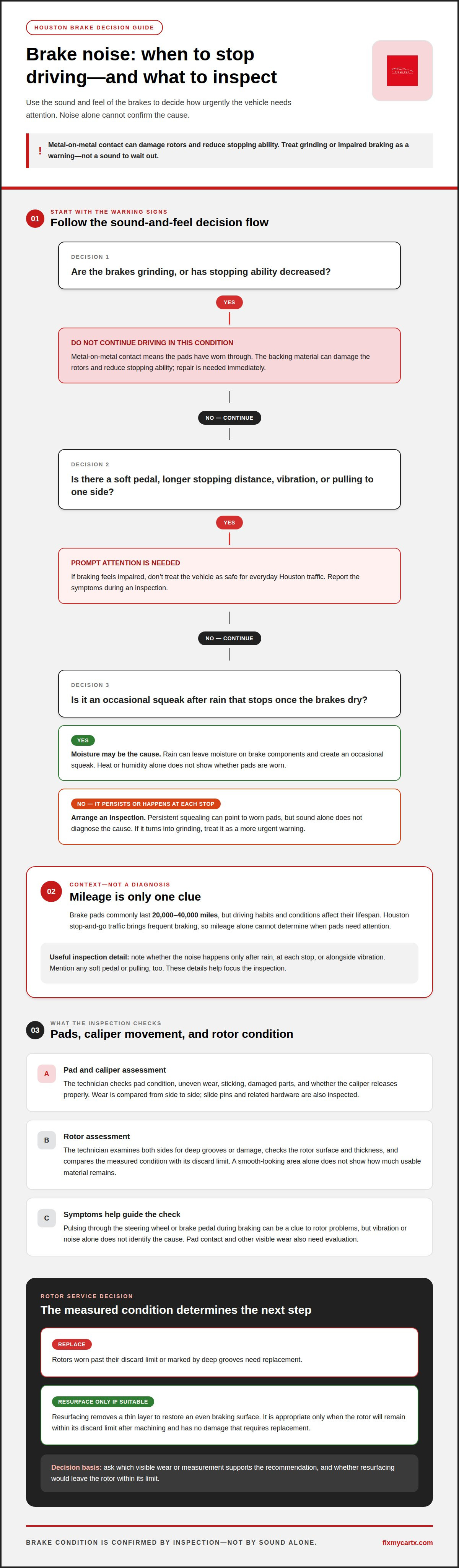
Metal-on-metal contact means the brake pads have worn through, allowing the backing material to damage the rotors and reducing stopping ability. Don’t continue driving in that condition; repair is needed immediately. Grinding, a soft pedal, longer stopping distances, vibration, or pulling to one side are warning signs. If braking feels impaired, don’t treat the vehicle as safe for everyday Houston traffic.
Rain can leave moisture on brake components and cause an occasional squeak. Humid weather may come with damp conditions, but heat or humidity alone doesn’t show whether pads are worn. If the sound continues after the brakes dry or turns into grinding, arrange an inspection instead of relying on sound to diagnose the cause.
Brake pads commonly last between 20,000 and 40,000 miles, but driving habits and conditions affect their lifespan. Houston traffic can require frequent braking, so mileage alone can’t determine when pads need attention. Regular inspections help identify wear before it leads to more extensive repairs. Ask for the pad condition and rotor contact to be assessed, especially if braking sounds or feels different.
Actions to Avoid
Don’t try to silence a squeak by spraying lubricant or household products on the rotor or pad surfaces. These surfaces need friction to slow the vehicle, and contamination can interfere with braking. Avoid hard, repeated stops just to test whether the noise disappears. If the brakes grind or the pedal feels soft, don’t keep driving to see whether the sound settles.
Instead, note when the noise occurs: for example, only after rain, at each stop, or alongside vibration. Leave extra following distance in Houston traffic and avoid unnecessary hard braking while arranging an inspection. Those habits can help reduce brake wear, but they don’t repair worn pads or damaged rotors.
Caliper inspection and lubrication
A brake caliper presses the pads against the rotor, so its movement matters. During an inspection, the technician checks for uneven pad wear, sticking, damaged parts, and signs that the caliper isn’t releasing properly. These clues help distinguish a caliper problem from noise caused by worn pads or debris.
Before visiting a shop, note when the noise happens: during light braking, after rain, or at every stop. Also record whether the pedal feels soft, the car pulls, or the steering wheel vibrates. These details help focus the inspection.
You can make a basic visual check, but caliper repair requires safely supporting the vehicle and removing a wheel. A qualified DIYer can check visible pad wear and look for unevenness, but should follow the vehicle’s service procedures and use brake-specific lubricant only at approved contact points. Never apply lubricant to pads or rotor surfaces.
A thorough brake inspection checks pad condition, rotor surfaces, caliper movement, slide pins, and related hardware. The technician compares wear from side to side and looks for pads that sit unevenly or drag. If slide pins bind, cleaning and appropriate lubrication may restore movement; damaged or seized components need repair or replacement.
When choosing a Houston shop for brake service, look for reviews describing clear explanations, careful inspections, and communication about recommended work. Reviews can offer insight into customer experience, but they can’t diagnose your caliper or confirm which repair your car needs.
Free inspections, estimates, and warranties vary by shop and by the work involved. Read the estimate for the listed parts and labor, and review any warranty terms before approving repairs. Don’t assume an inspection or warranty is included automatically.
Inspection time depends on access and what the technician finds. A visual assessment differs from diagnosing a sticking caliper, removing components, or completing repairs. Repair time also depends on which parts need service and whether the inspection reveals additional wear.
Rotor wear, resurfacing, and replacement
Rotor condition helps determine whether brake noise calls for cleaning, resurfacing, or replacement. A technician considers the rotor’s surface, thickness, and braking symptoms together.
Assessing Rotor Wear
Look for deep grooves, uneven wear, or a pulsing sensation through the steering wheel or brake pedal during braking. Warped rotors can cause pulsing, while grooves may indicate surface damage. These clues guide the inspection, but the rotor’s measured condition determines the appropriate service.
A technician checks the rotor against its discard limit and inspects both sides for damage. Rotors worn past that limit or marked by deep grooves need replacement. This assessment matters because a smooth-looking area alone doesn’t show whether the rotor has enough usable material left.
Pay attention to when vibration occurs. For example, if the steering wheel pulses specifically while braking, report that during the inspection. Noise or vibration alone doesn’t identify the rotor as the cause, so the technician also evaluates the pad contact surface and checks for other visible wear.
Resurfacing or Replacing Rotors
Resurfacing removes a thin layer from the rotor to restore an even braking surface. It’s suitable only if the rotor will remain within its discard limit after machining and has no damage that requires replacement. The technician measures the rotor before deciding whether resurfacing is appropriate.
Replacement is needed for rotors past their discard limit or with deep grooves. Ask which visible wear or measurement supports the recommendation, and whether resurfacing would leave the rotor within its limit. This explanation links the inspection findings to the repair decision and clarifies why machining or replacement is needed.
After rotor service, the braking surfaces need to work with the pads as intended. If pulsing continues after repair, describe when it occurs and whether you feel it through the pedal, steering wheel, or both. These details help guide a follow-up assessment instead of relying on sound alone.
Brake squealing and grinding
Brake sounds are clues, not a diagnosis. Notice whether they happen at startup, after rain, or during every stop, then compare them with how your vehicle responds.
Brake Squealing
An occasional squeak may follow moisture or debris around brake components. Persistent squealing can mean a wear indicator is touching the rotor as the pad material nears the end of its life. A squeaky-brakes fix in Houston should start by identifying when the noise occurs, not masking it. Note whether it fades after the first few stops or continues throughout the drive.
Consider the full pattern. Squealing during gentle stops, for example, differs from noise accompanied by a soft pedal, pulling, or longer stopping distances. These changes suggest the concern goes beyond sound and needs professional attention. Before the inspection, note what you notice, including whether the noise comes from one wheel or seems to come from elsewhere.
Brake Grinding
Grinding can mean the brake pads are substantially worn. Metal-on-metal contact can damage rotors and reduce stopping ability, so repair is needed immediately. Don’t keep driving to see whether the sound disappears. If braking feels compromised, avoid further trips and arrange an inspection to determine the damage.
For a practical squeaky-brakes fix in Houston, distinguish a brief squeak from grinding and describe exactly when each sound occurs. Mention whether the pedal feel or stopping response has changed. A technician can assess the pads and rotors together instead of treating noise alone as proof of a specific failure.
Keep your notes ready when arranging service. If squealing persists or grinding starts, arrange a brake inspection to identify the cause and appropriate repair.
Fix My Car: Collision Repair
Fix My Car can help when squealing, grinding, or changes in braking point to a repair need. Its brake repair service assesses brake concerns and addresses the work required. Share when the sound occurs, whether the pedal feels different, and any inspection findings about pads, calipers, or rotors. These details help focus the discussion on the symptoms you’ve noticed and the components involved.
If braking has become less dependable, don’t delay arranging service. Contact Fix My Car to discuss your brake repair needs.
Make your next brake decision with confidence
Let persistent brake noise prompt a clear plan, not more guesswork. A squeaky-brakes fix in Houston starts by matching inspection findings to the repair your vehicle actually needs. Ask for an explanation of the recommended work and how the inspected components relate to your symptoms. That gives you a practical basis for deciding what to address now and what to monitor.
Fix My Car handles brake concerns as well as broader vehicle repairs. If your visit also involves a separate mechanical issue or an air conditioner or heater concern, those services are available too. Keeping related repair needs in view can help you plan your vehicle’s care without losing focus on safe braking.
Choose the next step that fits your symptoms and inspection findings. Contact Fix My Car for brake service, and move forward with a clearer plan for your vehicle.
Frequently Asked Questions
Why do my brakes squeak when I stop?
Brakes may squeak because of moisture, debris, or a wear indicator touching the rotor as pad material gets low. Notice whether the sound happens only after the car sits in damp weather or returns at every stop. Noise that continues in dry conditions deserves inspection, especially if braking feel changes. Describe the timing and conditions to help narrow down the cause.
How do I know if my Nissan needs brake repair?
Your Nissan may need brake repair if it makes persistent noise, pulls during braking, vibrates, or takes longer to stop. Check whether these symptoms are new or worsening, and note if they happen at every stop or only in a particular situation. Brake wear depends on driving habits and conditions, so there’s no single mileage interval that applies to every Nissan. An inspection can assess its components.
How often should brake pads be replaced?
Brake pads commonly last between 20,000 and 40,000 miles, but that range isn’t a replacement schedule for every vehicle. Frequent stops, driving conditions, and braking habits affect wear. Rather than relying only on odometer readings, track changes in sound or stopping behavior and have pad condition assessed during routine service. A technician can explain whether the remaining material calls for replacement.
Why does my steering wheel vibrate when I brake?
A steering wheel that pulses during braking can point to warped rotors, which may also create a pulsing sensation through the brake pedal. Note whether the vibration happens only while braking or continues at other times. That distinction provides useful diagnostic context. Have the rotors and related brake components assessed together, since a steering-wheel sensation alone doesn’t identify the exact repair needed.
What causes brakes to squeak, and when is it dangerous?
Moisture, debris, or a pad wear indicator contacting the rotor can cause squeaking. Grinding is more concerning because it can indicate substantially worn pads and metal-on-metal contact. Treat grinding, a soft pedal, pulling, or reduced stopping ability as urgent warning signs. Avoid unnecessary driving if braking performance has declined, and arrange an inspection to identify the cause before further damage occurs.
How much does it cost to repair or replace rotors in Houston?
Rotor repair or replacement cost in Houston depends on the vehicle, rotor condition, and whether resurfacing or replacement is appropriate. Deep grooves or wear beyond the rotor’s discard limit call for replacement; a rotor with enough remaining material may be resurfaced. The price depends on the work required and is provided after a quote request, based on the parts and labor involved.
Comentarios