


Power steering fluid leak repair cost and what affects it
The leak’s location matters more than the size of the stain on your driveway. The power steering fluid leak repair cost depends on the failed part, how much damage has occurred, and how difficult the repair is to access. The estimate is based on the specific fault, with the main cost factors being parts, labor, and any related damage.
It’s understandable to want a clear estimate before deciding what to do. A worn hose may need a different repair from a leak inside the steering rack. Hydraulic and electric power steering systems also have different components and failure points.
This guide explains what affects repair costs, how to distinguish hydraulic from electric systems, and what common leak repairs involve. An inspection helps locate the source and determine whether the repair is limited to a hose or seal or may also involve the pump or steering rack.
Table of Contents
How Much Does Power Steering Repair Cost in 2026?
In 2026, a power steering repair can range from a hose repair to a full steering system replacement. The power steering fluid leak repair cost depends on the leaking component, parts required, labor, and damage caused by fluid loss. These estimates describe different repairs, so they shouldn’t be added together as one bill.
The diagnostic charge covers locating the leak, while labor covers the repair. A technician may inspect hose connections, clamps, the pump, and the steering rack to identify the source before replacing parts.
Hose estimates vary depending on the repair and what the quoted amount includes. These figures aren’t interchangeable: parts, labor, hose design, and access all affect the total.
A low-pressure return hose, by contrast, may use simple hose and clamps. The final bill still includes the work needed to reach, fit, and secure the line.
Pump repairs and replacement typically cost more than many hose jobs. If a leak leaves the pump without enough fluid and it overheats, replacing the pump adds a separate parts-and-labor expense.
Rack-and-pinion work involves a larger steering assembly and can require more labor. The vehicle and extent of related damage determine which estimate applies.
That figure differs from pump or rack replacement estimates because the repair scope and included parts can vary. Before comparing quotes, check whether each covers diagnosis, replacement parts, labor, fluid, and any necessary alignment.
Hydraulic and electric power steering repair costs
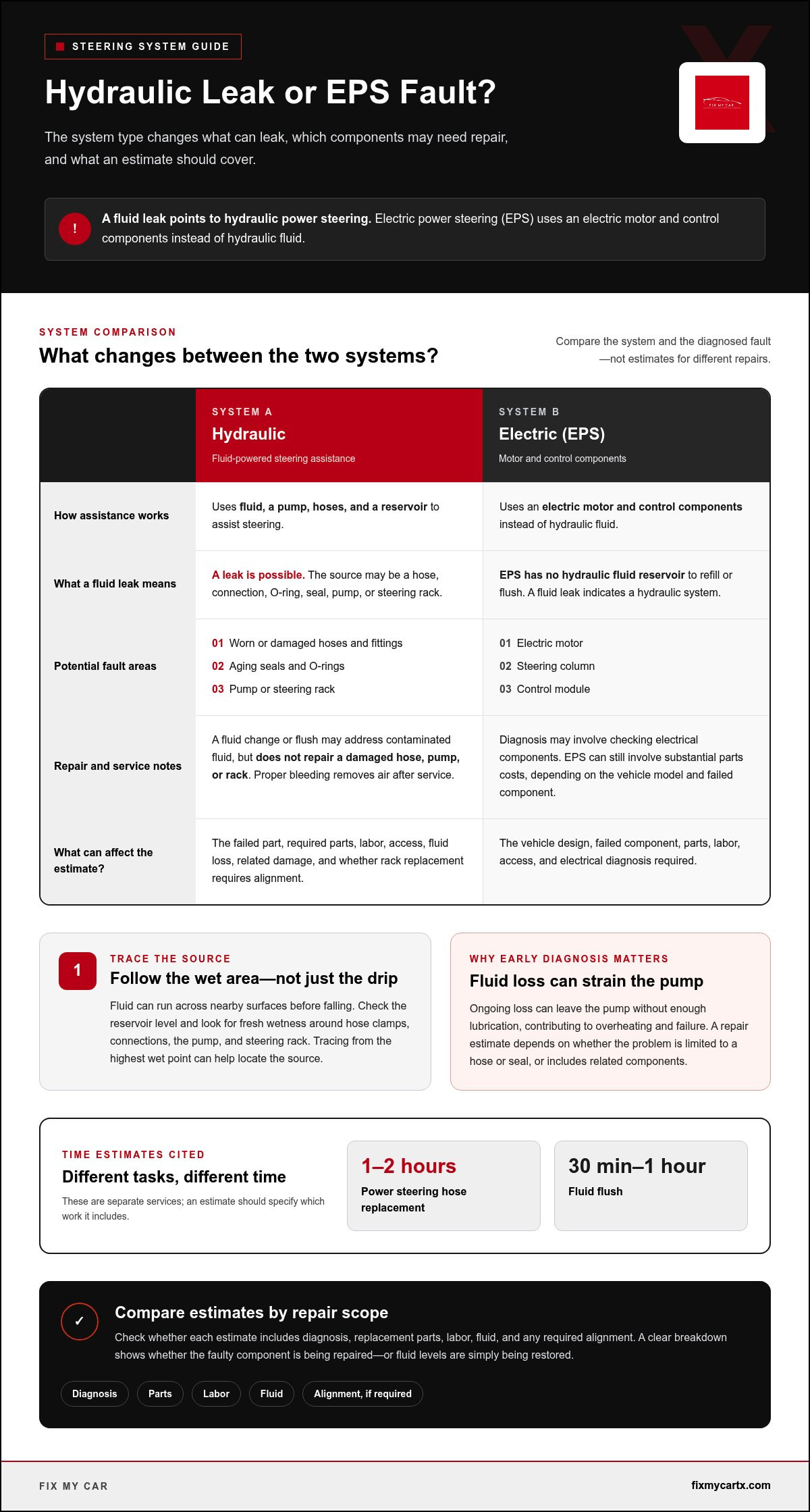
Hydraulic systems use fluid, a pump, hoses, and a reservoir to assist steering. Electric power steering (EPS) uses an electric motor and control components instead, so a fluid leak indicates a hydraulic system.
Average Repair Costs
An average estimate is a rough benchmark, not a universal price for every vehicle. Use it to frame the discussion, then compare the diagnosis and repair scope rather than treating the average as a guaranteed bill.
These figures describe different services, not alternative prices for the same fault.
Repair Cost Factors
Repair costs depend on the failed component, parts, labor, and access. A hydraulic leak may involve a hose or pump; an EPS fault can involve the motor, steering column, or control module. The distinction matters because an electric system has no hydraulic fluid reservoir to refill or flush.
Vehicle design also affects access and the scope of work. Replacing a rack can require alignment, while diagnosing EPS may involve checking electrical components. Identifying the system and fault makes estimates easier to compare.
Time and follow-up work add to the total. Power steering hose replacement is estimated to take 1-2 hours, while a fluid flush takes 30 minutes to 1 hour. These tasks differ, so an estimate should show which work it includes.
EPS repairs can involve substantial parts costs even without hydraulic fluid. The model and failed component shape the bill.
Hydraulic maintenance has its own cost considerations. A fluid change or flush can address contaminated fluid, but it won’t repair a damaged hose, pump, or rack. The fluid must meet the vehicle’s requirements, and the system needs proper bleeding after service to remove air. A flush estimate covers a different task from leak repair.
Compare estimates by checking whether they include diagnosis, parts, labor, fluid, and any required alignment. A clear breakdown shows whether the work fixes the faulty component or only restores fluid levels. This is especially useful when distinguishing a hydraulic leak from an EPS warning or steering fault.
Common causes of power steering fluid leaks
Hydraulic steering relies on sealed hoses, connections, O-rings, a pump, and a steering rack to contain fluid. As seals age, they can lose flexibility, and supply or pressure hoses can develop holes. A leak may begin as a small wet patch and become easier to trace as fluid escapes from a component or connection.
To help identify a leak, check the power steering fluid level and visually inspect for wet or stained areas. Follow visible fluid traces toward hose clamps, connections, the pump, and steering rack to find the likely source.
A cracked or worn hose feeding the pump is one possible cause. Supply and pressure hoses carry fluid through the system, so damage along a line can leave fluid on nearby components or beneath the vehicle. A loose or deteriorated connection can also appear wet. Inspecting both the hose and its fittings helps distinguish a line leak from fluid that has spread from another part.
O-rings and seals can lose flexibility with age, allowing fluid to escape where components join. A leak may be difficult to spot if the sealing surface is behind another component. Look for fresh wetness around joints rather than assuming the lowest visible drip marks the source. Fluid can run across nearby surfaces before falling, so tracing it from the highest wet point can help.
The pump and steering rack are also important places to inspect. Fluid lubricates the pump, and ongoing loss can leave it without enough lubrication, leading to overheating and failure. A leak around the pump may therefore involve more than a seal or connection. Fluid inside the rack-and-pinion assembly can be harder to locate because the leak may be within the steering system rather than on an exposed hose.
Power steering fluid is typically clear or slightly tinted red, but color alone doesn’t confirm its source. A technician can check the fluid level, hose clamps, connections, pump, and rack. These checks help distinguish a power steering leak from residue or fluid coming from another area of the vehicle.
A falling reservoir level paired with fresh wetness suggests an active leak. The system will continue losing fluid until the underlying fault is repaired, and continued loss can affect pump lubrication. Note where fluid appears and whether the level changes. These observations help focus inspection on the right components instead of replacing parts based only on a puddle’s location.
Average repair cost
An average repair figure is a reference point, not a price for every leaking power steering system. A hose, pump, and steering rack require different parts and work, so estimates can vary even when symptoms seem similar. The price depends on the case and is given after a quote request; the main factors are the leak location, damage extent, and parts requiring replacement.
Think of an average as a broad snapshot of different repairs. It may combine a straightforward hose repair with work on a pump or rack, even though those jobs have different scopes. Before using an average to plan, identify the leaking component and whether fluid loss has affected another part.
For example, a line leak and a pump leak can leave fluid in similar places beneath a vehicle. A line repair addresses the hose or its connection, while pump work addresses a different component. The estimate should name the faulty part and explain the work required, rather than relying on a general label such as “power steering repair.”
A rack leak can make an average especially difficult to apply. The steering rack is a larger assembly, and replacing it is different from repairing an accessible hose. If the estimate includes rack replacement, check how it accounts for the failed component and related work, such as alignment after replacement.
Compare estimates by scope, not just total. One may include diagnosis, replacement parts, labor, fluid, and system bleeding; another may describe only the repair itself. A written breakdown helps show whether both estimates address the same leak and include the same tasks.
Fluid loss can also change the repair required. Power steering fluid lubricates the pump, and a leak can leave it without adequate lubrication. If the pump overheats and fails, the repair becomes more extensive than fixing the original leak alone. That’s why an average may not reflect the condition of a particular vehicle.
Use the estimate to connect the symptom to a specific repair: identify the leak, name the affected component, and review the included work. A falling reservoir level or fresh fluid around a hose, pump, or rack provides useful context, but the component’s condition determines the repair scope. This makes an average a useful starting point, not a substitute for understanding the actual job.
Factors affecting power steering leak repair cost
The main cost drivers are the leak’s location, the damaged component, parts, labor, and related damage. Power steering fluid leak repair may involve a hose, pump, or steering rack, and each job requires different parts and access. Diagnosis helps distinguish a limited seal or line fault from a more extensive repair.
A hose replacement is estimated to take 1-2 hours, while rack-and-pinion replacement may take 3-5 hours. Tight access can add work.
Parts and vehicle design matter too. A high-pressure hose may require a specific replacement part, while a simple return-line repair uses different materials. If fluid loss has caused the power steering pump to overheat and fail, the work may include replacing the pump as well as fixing the original leak. That added damage changes the job’s scope.
Location also affects labor. A leak at an accessible hose connection is usually easier to trace than fluid escaping inside the steering rack. When comparing estimates, check whether diagnosis, parts, labor, fluid, and alignment are included.
Stop-leak products can’t repair serious damage to the pump, gearbox, or other hardware, and their effectiveness varies with leak size, location, and product quality. Some low-quality additives may leave residue that affects long-term system operation.
Driving with a continuing leak can leave the pump without adequate lubrication, increasing the risk of overheating and failure. Adding fluid doesn’t fix the leak. A lasting repair addresses the failed hose, seal, pump, or rack, and the system should be checked afterward for proper fluid level and operation.
Warranty coverage depends on the contract’s covered parts and conditions. Insurance coverage depends on the policy’s terms and covered causes; an ordinary mechanical leak isn’t automatically covered as collision damage.
For a leak that needs diagnosis, arrange a power steering inspection to identify the failed component and repair scope. A clear assessment can help separate the original leak from damage caused by continued fluid loss.
Fix My Car: Collision Repair
Fix My Car provides mechanical work for drivers dealing with vehicle problems beyond collision damage. If a power steering leak is affecting how your car steers, mechanical repair is the relevant next step. An inspection can help identify whether the problem is limited to a leaking component or involves related damage.
If the leak began after an impact, collision repair may also be relevant because collision damage can affect vehicle components. The right service depends on what caused the problem: a fluid leak alone doesn’t necessarily require collision repair. Sharing when you noticed the leak and any changes in steering can help clarify the concern.
For help with a steering concern or collision-related damage, contact Fix My Car to discuss the issue.
Make the next step a clear one
Before arranging a repair, note when you first saw the fluid and whether steering effort has changed. These details can make the initial discussion more focused. The power steering fluid leak repair cost depends on the fault, required parts, labor, and any related damage; an estimate reflects the specific repair.
If the leak appeared after an impact, mention that connection, since it can help clarify whether the vehicle needs mechanical attention or collision-related assessment. Fix My Car offers mechanical work and collision repair to address the repair need that fits the situation. You don’t need to guess which component has failed before describing what you’ve noticed.
Explore repair help with Fix My Car and take the next step toward understanding the issue. A clear description of the symptoms is a practical place to start.
Frequently Asked Questions
Can my power steering stop leaking on its own?
No, a power steering fluid leak won’t stop until the source is repaired. A spot may disappear from the ground if fluid dries or shifts, but that doesn’t mean the system has sealed itself. A stop-leak additive may temporarily reduce some small leaks, but it won’t restore a damaged hose or pump. Watch for fresh wetness and changes in the reservoir level rather than relying on the puddle alone.
Why is my power steering fluid leaking?
Common causes include worn hoses, aging O-rings, and seals that have lost flexibility. A pressure hose, for example, can develop a hole, while a seal can let fluid escape where components meet. Fluid can travel along nearby parts before dripping, so the puddle’s position may not reveal the source. Fresh wetness around a connection, pump, or steering rack can help focus the inspection.
Is it worth fixing power steering on an older car?
Repair may be worthwhile if the vehicle is otherwise in sound condition and the leak has a limited scope. Consider the car’s overall mechanical condition, how reliably it meets your needs, and whether fluid loss has damaged other steering components. A localized leak is a different decision from a failing rack or pump. For an older vehicle in Houston, weigh the diagnosed repair against its broader condition, not age alone.
How much does it cost to repair a power steering fluid leak?
The estimate depends on the failed part and any damage caused by continued fluid loss. Diagnosis and labor also affect the total. Ask for an estimate that identifies the leak source and separates the proposed repair from related work, so you can understand what the amount covers.
What is the average cost to replace a power steering hose or line?
These figures describe different estimate scopes, so compare the included parts and labor before treating them as equivalent. A high-pressure hose may also differ from a return line in design and access, affecting the final estimate.
What factors affect power steering fluid leak repair prices?
The biggest factors are the leak location, the part that needs replacement, labor time, and related damage. A hose connection may require a different repair from a leak inside the steering rack. Vehicle layout can affect access, and fluid loss may lead to pump damage. To compare estimates, check the diagnosed component, parts, labor, fluid, and any follow-up work instead of relying on a repair label alone.
What are the symptoms and risks of driving with a power steering fluid leak?
Look for a dropping fluid level, fresh fluid under the vehicle, or steering that feels harder than usual. A driver may need almost five times the usual effort for simple turns when power steering is failing. Fluid lubricates the pump, so ongoing loss can leave it without lubrication and cause overheating or failure. If steering effort changes, don’t treat a top-up as a lasting repair.
How do repair costs vary by vehicle make, model, and location?
Make and model affect which parts fit, how accessible the steering components are, and how involved replacement becomes. A luxury vehicle’s rack assembly can differ greatly from a simpler system. Location also matters because labor rates and shop type influence estimates; dealerships typically charge 30-50% more than independent mechanics for the same repair. In Houston, compare quotes by repair scope and included work, not just the bottom line.
Comentarios