


How to Choose a Body Shop After an Insurance Claim
Your insurer’s preferred shop is not your only option. Choosing a body shop after an insurance claim starts with knowing that you make the final decision about where your vehicle is repaired. An insurer may recommend a preferred shop, but that does not take the choice out of your hands.
When you’re already managing an insurance claim and a damaged vehicle, a clear path forward matters. The right shop should explain the repair plan, parts, estimate, and how it handles additional damage found during repairs. This guide covers how to choose a licensed body shop, compare parts and estimates, and understand how hidden damage can affect your claim. It also explains what to consider for pickup, transportation, loaners, or rental coverage, so you can make your next decision with confidence.
Table of Contents
After an Auto Wreck, Can I Choose My Own Body Shop?
Yes. As the vehicle owner, you make the final decision about where repairs are done, including after a collision in the Houston area. An insurer may recommend a preferred shop, but that recommendation does not automatically determine where your vehicle goes.
You can change shops after repairs start. Notify your insurer and both shops, document any completed work, and arrange the vehicle transfer.
Yes, shop-choice rules vary by state. For a Houston claim, review your policy and claim communications rather than assuming rules from another state apply.
Review Insurer-Preferred Repair NetworksCompare your insurer’s preferred network with other shops you’re considering in Houston. These programs, also called Direct Repair Programs, include participating shops screened for quality, customer service, warranties, and timely repairs. A recommendation does not remove your choice. Ask how the shop handles claim paperwork, repair updates, and differences between its estimate and the insurer’s. A preferred shop may agree to work within the insurer’s estimated time and cost, so understand how it handles disagreements.
Choose a Licensed Repair ShopChoose a licensed shop experienced in collision repairs, and review its repair process before authorizing work. Ask whether it follows the vehicle manufacturer’s repair guidelines and what its warranty covers. Warranty terms vary by shop and service, so get the details in writing. A license alone does not explain the repair method or warranty. For example, ask how the shop plans to repair a damaged panel and what documentation you’ll receive.
Compare Shop OptionsCompare insurer-approved and independent shops on repair quality, service, and convenience. Look for I-CAR Gold Class, Automotive Service Excellence, or manufacturer-specific certifications as indicators of relevant training. Check reviews from multiple sources and consider recommendations from people you trust. Then compare communication, repair updates, and transportation arrangements. If you choose an independent shop, understand the claim process before authorizing work: the insurer may dispute its repair price or limit payment to its estimate.
Check Shop Choice RulesCheck the rules for the state where the vehicle is insured and repaired. State laws differ, so don’t assume a protection described for another state applies to your Houston claim. Review your policy and insurer communications for requirements affecting estimates, approvals, or payment. If you choose a shop outside the insurer’s preferred network, keep the estimate and claim correspondence together. This makes it easier to identify and discuss disagreements about repair scope or price.
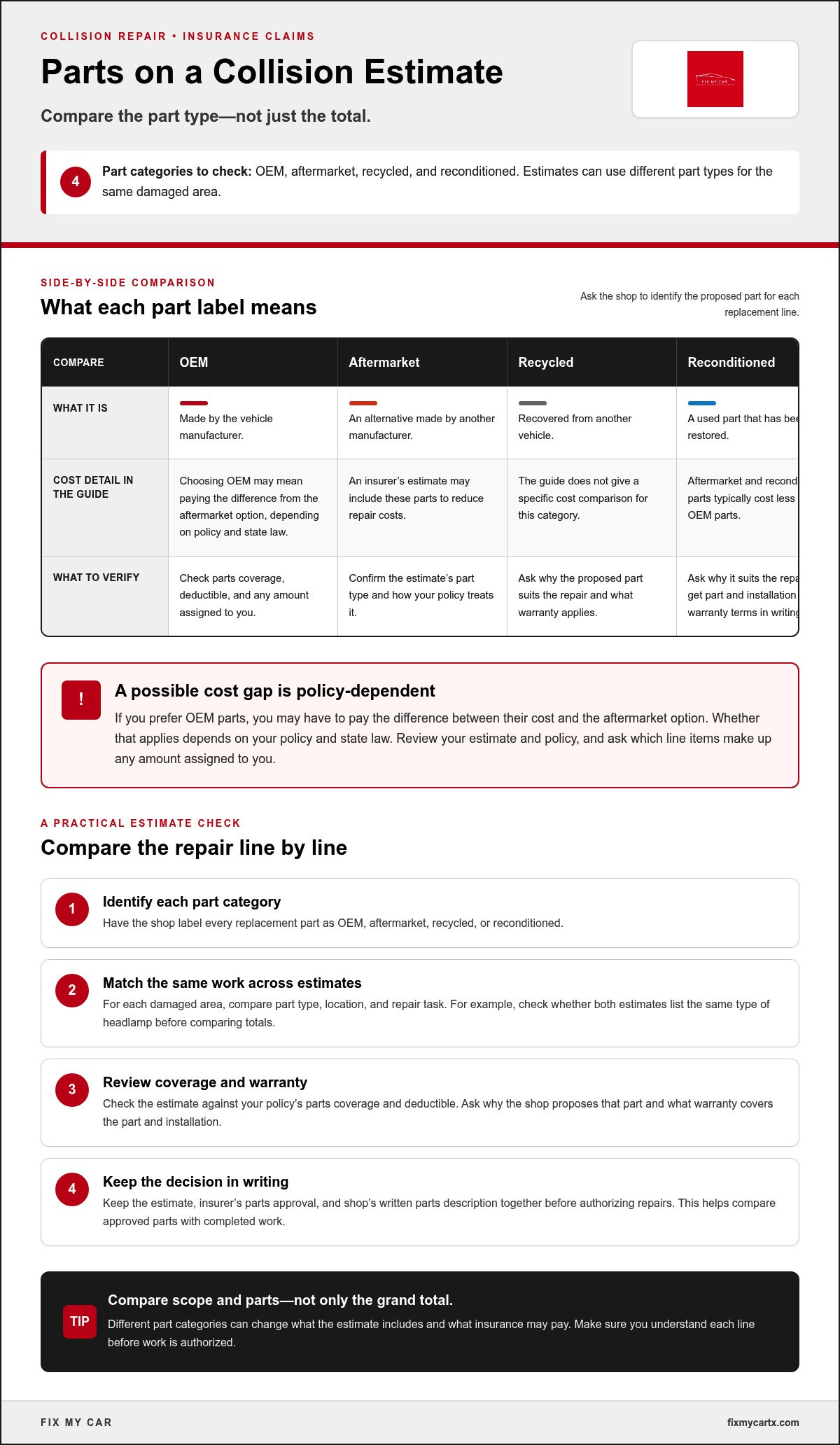
OEM, aftermarket, recycled, and reconditioned parts
Compare estimates by part type, not just by total. The part category affects what the shop installs and what your insurance coverage may pay.
Identify the part categories. Ask the shop to label each replacement part as OEM, aftermarket, recycled, or reconditioned. OEM parts come from the vehicle manufacturer. Aftermarket parts are alternatives made by other manufacturers. Recycled parts are recovered from another vehicle, while reconditioned parts are used parts that have been restored. These labels help you understand what the estimate includes.
Match each estimate line to the proposed part. Compare the part type, location, and repair task for each damaged area. For example, one collision estimate might list an OEM headlamp and another an aftermarket headlamp. Before comparing totals, check that both estimates include the same part categories and repair work.
Review how coverage treats your preference. Insurance estimates may include aftermarket parts to reduce repair costs. Depending on your policy and state law, choosing OEM parts may mean paying the difference between their cost and the aftermarket option. Review the estimate alongside your policy’s parts coverage and deductible, and ask which line items account for any amount assigned to you.
Weigh cost against part and warranty details. Aftermarket and reconditioned parts typically cost less than OEM parts, but that does not make them the right fit for every repair. Ask what part the shop proposes, why it suits the repair, and what warranty applies to the part and installation. Warranty terms vary by shop and service. Get the terms in writing before authorizing work.
Record your decision before repairs begin. Keep the estimate, insurer’s parts approval, and shop’s written parts description together. If a damaged lamp needs replacement, review the repair plan for the specific component; headlight and taillight replacement may be relevant to that repair. Written records make it easier to compare the approved parts with the completed work.
Before approving work, ask whether the repair shop proposes OEM, aftermarket, recycled, or reconditioned parts, and confirm how each part is described. OEM parts come from the vehicle manufacturer, aftermarket parts are alternatives made by other manufacturers, and reconditioned parts are used parts that have been restored.
Supplement estimates for hidden damage
If the repair shop’s estimate exceeds the insurer’s estimate, the shop can document the additional work and submit a supplement for review. Disagreements over repair scope or cost can delay payment.
Use a photo estimate as an initial review. If the insurer offers a photo-based Quick Estimate, provide clear images of each damaged area and the vehicle’s overall condition. Photos can show visible impact, but may not reveal damage behind a bumper, panel, or other part. Treat the initial estimate as a starting point, not a complete account of repairs that need closer inspection.
Ask how the shop will inspect concealed areas. Before repairs proceed, ask the shop how it will assess damage that photographs cannot show. A technician may need to remove damaged parts during teardown to inspect affected components and determine the full repair scope. Ask how the shop records its findings, which areas need further inspection, and how it will communicate changes.
Request an itemized supplement. When teardown reveals additional collision damage, the shop can submit a supplement to the insurer. Ask for the revised estimate to list newly discovered damage, required work, and parts separately from the original estimate. Photos and inspection notes can help explain the change in repair plan. Keep copies of the initial estimate, supplement, and related insurer messages together.
Track review and approval before added work. Ask who will contact the insurer’s representative and how the shop will share updates. After an adjuster reviews the estimate, the shop can seek approval, order parts, and schedule repairs. Clarify which work the insurer has approved and which items remain under review. Because disputes over repair scope or cost can delay payment, keep a written record of decisions and dates.
Compare the estimates line by line. If the totals differ, look beyond the final amount. Check whether the estimates describe the same damage, repair operations, parts, and labor. Ask the shop to explain each added item in plain language, then direct specific questions to the insurer. A clear comparison can show whether the difference reflects hidden damage, a different repair approach, or an unresolved disagreement.
California drivers’ right to choose a licensed body shop
For a Houston-area claim, focus on your choice of shop and the terms of your policy. You make the final decision about where repairs are performed, while the insurer reviews the claim and proposed work.
Identify your preferred facility. Choose the licensed auto body shop you want to assess the collision damage, then tell your insurer where the vehicle will be inspected. Keep the shop’s name and contact details with your claim information. This helps direct estimate questions and inspection arrangements to the right place instead of leaving the destination unclear.
Review the policy and claim instructions. Read the sections that explain repair estimates, authorization, and payment. These terms clarify how the insurer will assess the proposed work and what documentation it needs. For example, if the insurer requests an inspection before repairs begin, coordinate it with your chosen Houston shop and keep the appointment details in writing.
Separate a recommendation from a requirement. An insurer may suggest a preferred facility, but you make the final repair-shop choice. Ask what practical benefits the recommended shop provides, such as direct claim communication or repair updates. Then compare those details with the independent shop you’re considering, including trusted local providers like Fix My Car. Base your decision on the repair plan, communication, and convenience, rather than assuming a referral is mandatory.
Keep estimates and decisions together. Save the shop’s estimate, the insurer’s estimate, inspection notes, and approval messages in one claim record. If the documents differ, mark the repair items that need discussion. A clear record helps you explain the vehicle’s condition and track which work has been reviewed. It also gives the shop and insurer a shared reference for follow-up.
Resolve payment questions before authorizing work. Ask the insurer and selected shop to clarify differences in repair scope or cost before work proceeds. The insurer may dispute a repair price when the shop is outside its preferred network, and payment responsibility depends on the claim and policy terms. Get the explanation in writing, then make an informed decision about the next repair step for your Houston vehicle.
Texas insurers must cover reasonable repairs at a driver’s chosen licensed shop, and local motorists may have the right to claim diminished value after collision repairs. Drivers filing insurance claims in the Houston area can choose any licensed body shop, including Fix My Car, rather than being forced to use insurer-listed shops.
Should I get multiple repair estimates after an insurance claim?
Yes. Getting estimates from 2 or 3 reliable auto body shops can help you compare repair scope, parts, and proposed costs. Use the insurer’s estimate as another document to review, not the only basis for comparing repair plans.
Request comparable written estimates. Give each shop the insurer’s estimate, claim details, and the same description of the accident damage. Ask each shop to identify the included repair operations and parts. Comparable details make differences easier to spot, such as one estimate including a replacement part while another lists repair work. Save and date each version.
Compare repair scope before totals. Review each estimate line by line. Check which damaged areas are included, whether related work is covered, and whether the proposed parts match. A lower total may reflect a narrower repair scope, not a more efficient approach. Ask the shop to explain unfamiliar terms or omitted operations in plain language, then record the explanation beside the estimate.
Separate the shop’s estimate from the insurer’s approval. An estimate describes proposed work; it does not mean the insurer has approved every line. Compare the shop’s document with the adjuster’s estimate and note differences in scope, parts, and repair operations. If the insurer and shop disagree, the insurer may only be responsible for paying up to its estimate. Clarify disputed items before authorizing work that exceeds approved coverage.
Use the estimates to guide a focused discussion. Send the insurer and chosen shop the specific lines that differ, rather than asking generally why the totals do not match. Request an explanation of the repair method, parts, or damage assessment behind each difference. If inspection reveals hidden damage after work begins, the shop can submit a supplement. That review may change the estimate, so keep all versions together.
Choose based on the complete repair plan. Consider how clearly each shop explains its estimate, communicates with the insurer, and describes its repair process. Check whether the proposed work follows the vehicle manufacturer’s repair guidelines, and review applicable warranty terms. Convenience matters too, but don’t let the lowest total alone decide. For a collision repair estimate, request collision repair service and compare the written scope with your insurer’s document.
Fix My Car: Collision Repair
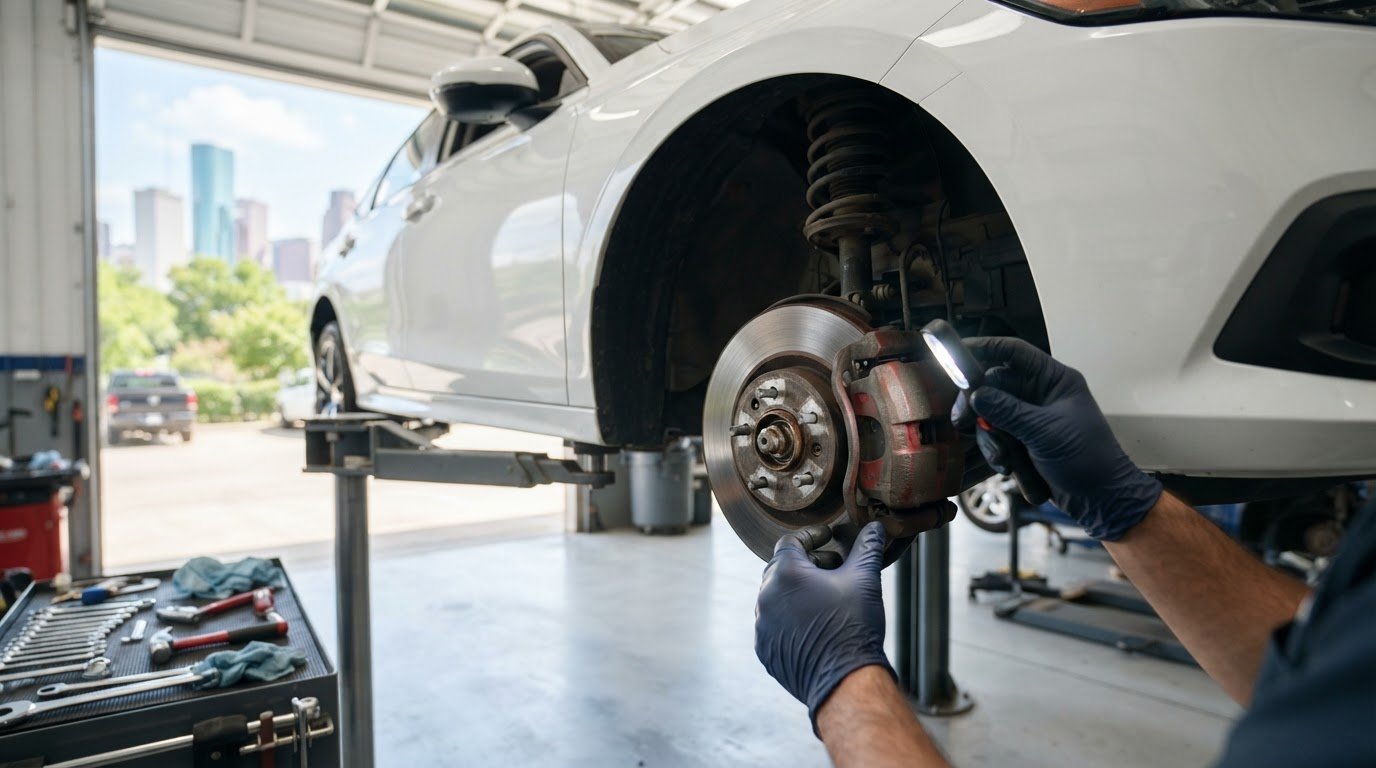
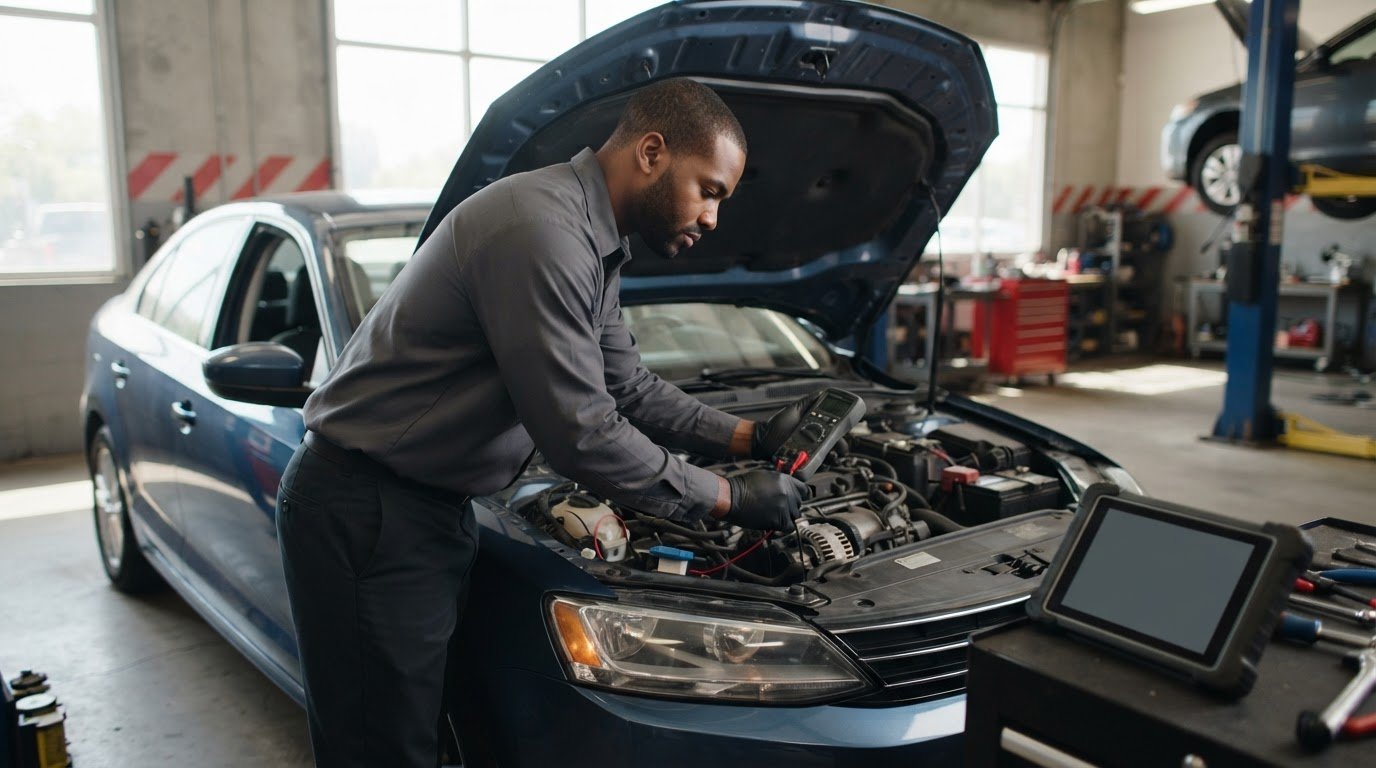
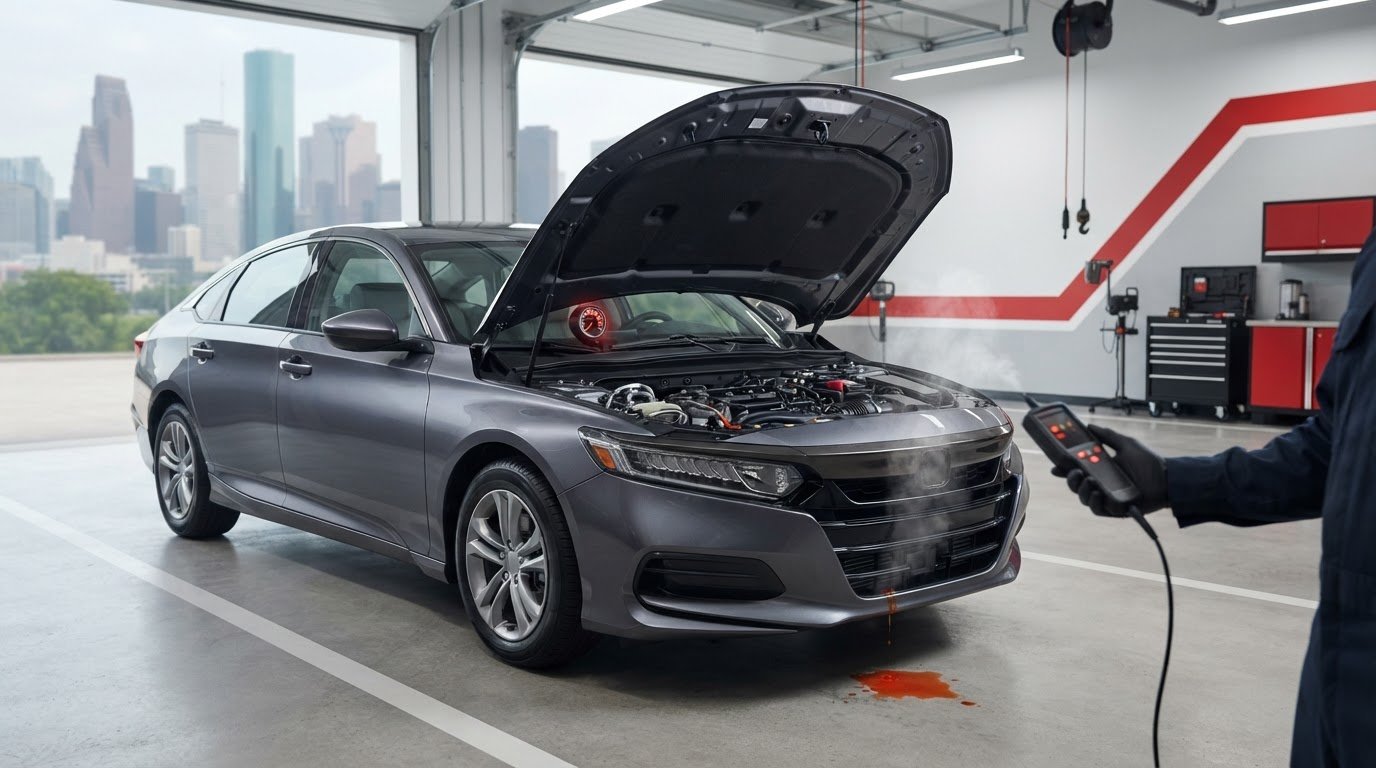
Fix My Car handles collision repairs after an accident, including damage that may need further assessment once work begins. Its insurance-friendly process and free estimates can help you understand the proposed repair scope and discuss next steps for your claim. If the impact also affected how your vehicle drives, the shop offers mechanical work, brake repair, and air conditioner and heater repair.
Bring your insurer’s estimate and related claim documents so the repair discussion can focus on the listed damage and open questions. Fix My Car handles collision repairs; compare the proposed scope with your insurer’s approved estimate before authorizing work.
For collision repair information, visit Fix My Car online.
Move Forward With a Clear Repair Plan
Choosing a body shop after an insurance claim also means deciding how you want the repair process to work: informed, organized, and focused on your vehicle’s needs. Gather your claim documents and note questions about the repair plan or damage before taking the next step. A focused discussion can clarify what happens next.
Fix My Car provides collision repair, as well as mechanical work and air conditioner and heater repair when your vehicle needs attention beyond visible body damage. Share the information you have so the repair discussion can focus on your situation and priorities.
Contact Fix My Car today to discuss your vehicle’s repair needs. You’re ready to take the next step with greater clarity.
Frequently Asked Questions
Need Help With the Process?
Start by organizing your claim number, insurer’s estimate, damage photos, and claim messages. For a Houston repair, note any open questions, such as who will review the estimate or when the shop can inspect the vehicle. Keep a written record of conversations and decisions. This makes follow-up clearer if the repair plan changes or the insurer requests more documentation.
Can I choose my own auto body shop after an insurance claim?
Yes, you make the final decision about where repairs are performed. Choosing a body shop after an insurance claim means considering how clearly the shop explains its proposed work, communicates, and handles claim details. Before authorizing repairs, save the estimate and document the vehicle’s condition. This gives you a reference if the repair scope changes.
Can an insurer require me to use a preferred or network repair shop?
An insurer may recommend a preferred network, but that does not automatically make its shops your only options. Preferred programs can offer a more direct process for claim paperwork and shop communication. Review your policy and the insurer’s instructions for your Houston claim, especially how estimates and payment are handled. Keep the recommendation and related claim messages with your records.
What are my rights when choosing a collision repair shop in the United States?
Your rights can depend on the state involved, so don’t assume one state’s rules apply nationwide. You make the final decision about where repairs are performed, but state law and policy terms can affect estimates, payment, and dispute handling. For a Houston claim, review your policy and claim instructions before authorizing work or resolving a payment difference.
How do I compare body shop estimates, warranties, and repair quality?
Compare the work and parts listed for each damaged area, not just the estimate total. For example, check whether both estimates propose repairing the same panel or replacing it. Ask for warranty coverage and exclusions in writing. To assess repair quality, look for I-CAR Gold Class, ASE, or manufacturer-specific certifications, and consider how clearly the shop explains its repair plan and updates.
How can I check a body shop's certifications, reviews, and complaint history?
Ask which certifications apply to the shop or its technicians, then look for credential information from the issuing organization. Read reviews across multiple platforms and note recurring comments about communication or follow-through. To research complaints, search the shop’s name alongside relevant state consumer or licensing resources. Consider the circumstances and resolution of each complaint rather than relying on a single rating or review.
What questions should I ask a body shop before authorizing repairs?
Ask what the estimate includes, which parts the shop proposes, and how it will document additional damage found during inspection. Clarify how the shop will communicate with the insurer and update you about changes. Ask what the warranty covers and how it will explain work that differs from the initial estimate. Before signing, compare the written authorization with the repair plan you discussed.
What risks come with aftermarket or used parts in insurance repairs?
Aftermarket and used parts may cost less than OEM parts, but the estimate should identify what the shop plans to install. Ask whether a used part is recycled or reconditioned, and request details about its condition. Compare the part description with the insurer’s estimate and keep the response in writing. Depending on your policy and state law, choosing OEM parts may leave you responsible for the price difference.
Comentarios