


Car Overheating Diagnosis in Houston for Cooling System Issues
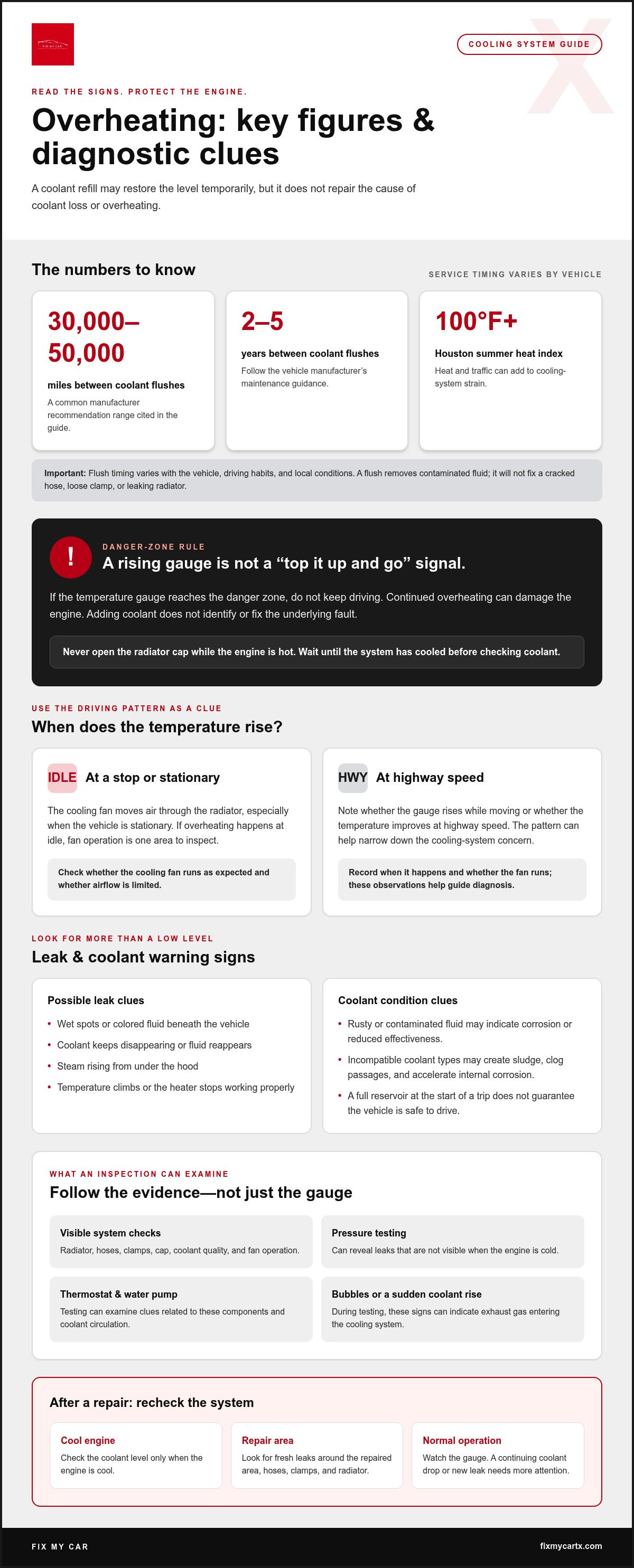
Adding coolant may temporarily restore the level, but it won’t fix a leak or another fault that is making the engine overheat. A car overheating diagnosis in Houston can help identify whether the cause is a leak, a cooling-system component, or contaminated coolant. If the temperature gauge reaches the danger zone, continuing to drive can damage the engine.
It’s understandable to hope that topping up the coolant will be enough, especially when you need to get somewhere. But repeated coolant loss, steam, or a gauge that keeps climbing means the problem needs attention, not another refill. This guide explains when adding coolant may help, why driving with a suspected radiator leak is risky, and how hoses, the thermostat, or water pump can affect the engine. You’ll also learn what a cooling-system inspection can reveal and what to do when the temperature starts rising.
Table of Contents
Can I Drive with a Leaking Radiator?
A leaking radiator makes driving risky because coolant loss can lead to overheating and engine damage in a short time. Adding coolant may temporarily restore the level, but it won’t fix the source of the leak.
Coolant Leaks and Low Coolant
Cracked hoses, loose clamps, and a worn radiator can let coolant escape. Leaks may also come from the cap, reservoir, water pump area, or heater core. Look for wet spots or colored fluid beneath the vehicle, and note whether the temperature gauge climbs or the heater stops working properly.
Low coolant can disrupt circulation and leave the engine without enough protection from heat. Rusty or contaminated fluid can indicate corrosion or reduced effectiveness. Mixing incompatible coolant types may create sludge, clog passages, and accelerate internal corrosion. Never open the radiator cap while the engine is hot.
Topping up alone doesn’t explain why the level fell. If coolant keeps disappearing, fluid reappears, or steam rises from under the hood, treat the leak as unresolved. If the temperature gauge reaches the danger zone, continuing to drive can damage the engine. A coolant leak can worsen while the system operates, so a full reservoir at the start of a trip doesn’t mean the vehicle is safe to drive.
Coolant Checks, Flushing, and Refills
After a repair, check the coolant level and look for fresh leaks around the repaired area, hoses, clamps, and radiator. Recheck the level only when the engine is cool, and watch the temperature gauge during normal operation. A continuing drop or new leak means the cooling system needs more attention.
Coolant flush timing varies by vehicle. Most manufacturers recommend a coolant flush every 30,000-50,000 miles or every 2-5 years. Follow the vehicle manufacturer’s maintenance guidance, since driving habits and local conditions also affect service needs. A flush removes contaminated fluid, but it won’t fix a cracked hose, loose clamp, or leaking radiator.
During auto repair, coolant condition matters as much as the level. A technician can assess the fluid and check for contamination or corrosion, then determine whether repair, replacement, flushing, or further diagnosis is needed. These checks help explain ongoing coolant loss instead of relying on repeated refills.
What Can Happen If I Ignore a Cooling System Problem?
Don’t keep driving if the temperature gauge reaches the danger zone. Continued overheating can damage the engine. The cause may be the coolant level, fan, hoses, thermostat, or water pump. A car overheating diagnosis in Houston can help identify which part of the system needs attention.
Houston summer heat indexes can exceed 100 degrees, and traffic adds another factor: overheating at idle may point to a different cooling-system concern than overheating at highway speed. Note when the temperature rises, whether the vehicle is moving, and whether the cooling fan runs. Those observations help narrow the diagnostic path.
Common causes include a failed water pump, leaking radiator hoses, radiator leaks, and thermostat failure. A cooling-fan problem, restricted radiator, or air trapped in the system can also interfere with temperature control. Each fault affects heat removal or coolant circulation differently, so replacing a part based only on the gauge may miss the cause.
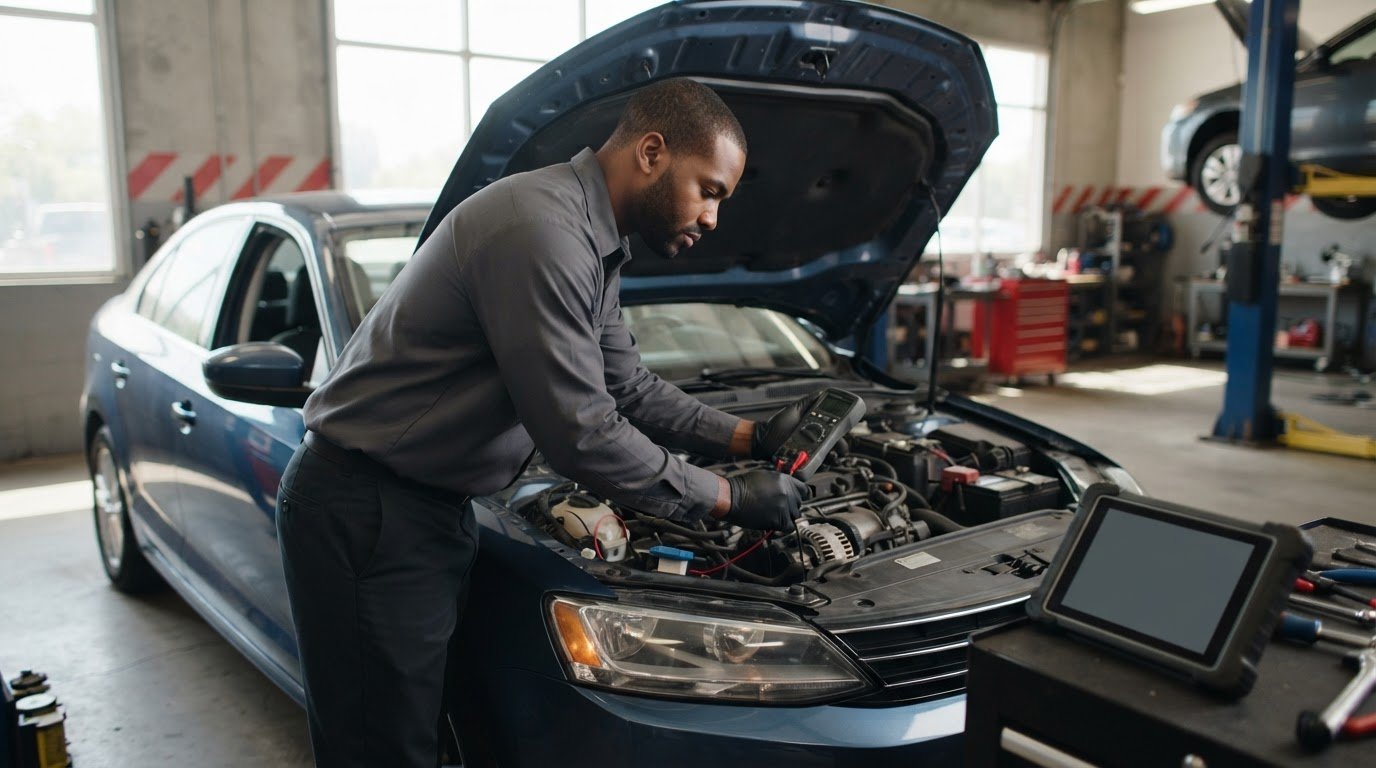
An inspection can check the radiator, hoses, clamps, cap, coolant quality, and fan operation. Pressure testing can reveal leaks that aren’t visible when the engine is cold. Testing may also examine thermostat and water pump clues. Bubbles or a sudden coolant rise during testing indicate exhaust gas entering the cooling system, according to the U.S. Government Publishing Office.
What are signs of a blown head gasket versus other overheating causes? Bubbles or a sudden coolant rise during testing can indicate exhaust gas entering the system, while leaks, fan faults, and thermostat problems suggest other possible causes. Testing helps distinguish these issues instead of relying on one symptom.
Can Houston heat and traffic affect overheating? Yes. Summer heat indexes can exceed 100 degrees, and overheating at idle may suggest a different cooling concern than overheating at highway speed. Getting a car overheating diagnosis in Houston can help connect those driving conditions to the system’s symptoms.
If the overheating coincides with poor cabin heating or cooling, air conditioner and heater repair may address that related symptom. A rising gauge still calls for prompt attention to the cooling system itself.
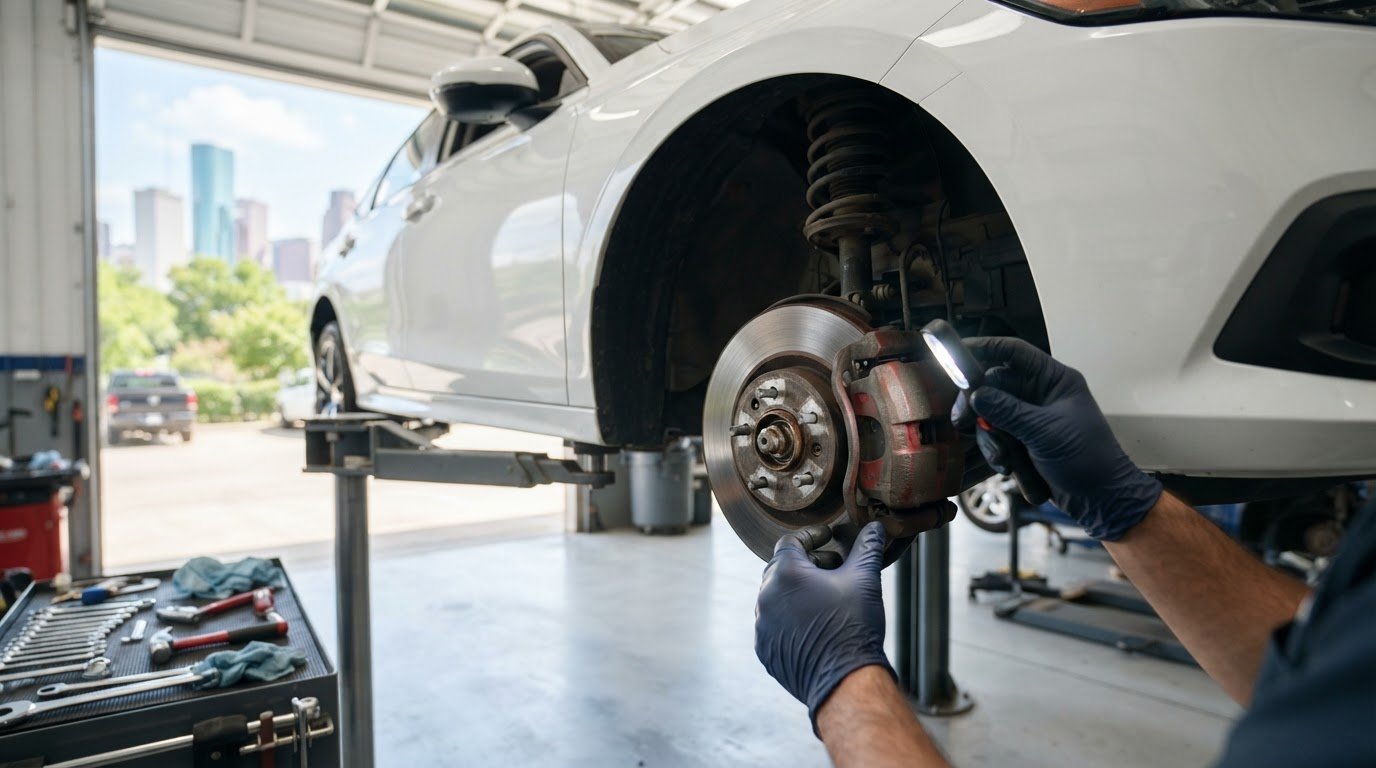
Radiator, water pump, and thermostat problems
The radiator removes heat from the coolant before it returns to the engine. A faulty thermostat or water pump can disrupt this process and push the temperature gauge upward.
Radiator Leak Detection and Damage
A radiator leak can lower coolant levels, while a clogged or damaged radiator may not release heat effectively. Look for visible fluid, recurring temperature changes, or a low-coolant warning. A pressure test can reveal leaks that aren’t visible when the engine is cold. Inspection also checks for corrosion and restricted flow that may call for repair or replacement.
Radiator Fan Inspection
The cooling fan moves air through the radiator, especially when the vehicle is stationary. If the temperature rises at idle but improves at highway speed, fan operation is one area to inspect. Testing checks whether the fan runs as expected and whether a fault is limiting airflow. A fan problem can raise engine temperature even when the radiator has no visible leak.
Radiator Repair and Replacement
Radiator repair in Harris County can include checking coolant condition, inspecting hoses and clamps, testing the fan, and locating leaks. The findings help distinguish a repairable leak from radiator damage or blockage that affects heat transfer. If replacement is needed, the rest of the cooling system still requires inspection. A new radiator won’t correct a faulty thermostat or water pump.
The thermostat regulates coolant flow as the engine warms. If it fails, coolant may not circulate correctly; a failing water pump can also interrupt circulation. Either fault may cause overheating and engine damage. An automotive inspection considers the temperature pattern and related cooling-system symptoms, including changes in cabin heat that may involve the heater core.
What do common overheating repairs cost? The price depends on the fault, affected parts, and work required, and is provided after a quote request. Diagnosis helps determine whether the issue involves the thermostat, radiator, water pump, or another component.
How Can I Tell If My Radiator Needs Repair?
A rising temperature gauge, visible coolant leaks, or a low-coolant warning can point to radiator trouble. These signs don’t identify the failed component by themselves, so thermostat testing can help distinguish a flow-control fault from radiator damage.
The thermostat regulates coolant flow as the engine warms. If it fails, coolant may not circulate correctly and the temperature gauge may show overheating. A heater that stops working properly can also signal a cooling-system fault. Note when these symptoms occur, such as while driving or after the engine warms.
Testing checks whether the thermostat regulates engine temperature correctly. The result matters because a restricted radiator, faulty thermostat, and failing water pump can produce similar overheating symptoms. Inspection also considers coolant condition, corrosion, and leaks that could affect circulation. Replacing the thermostat without diagnosing related components may leave the original problem unresolved.
A radiator inspection looks for leaks, damage, and restricted heat transfer. A clogged or damaged radiator may not dissipate heat effectively, while corrosion can affect its condition. Hoses, clamps, and the radiator cap also need attention because a leak elsewhere can look like a radiator fault. The temperature pattern and visible evidence help narrow down the cause.
Keep track of whether the heater works, when the temperature rises, and whether coolant leaks appear. These details help distinguish a thermostat fault from a radiator or water-pump problem. If the gauge reaches the danger zone, continuing to drive can damage the engine. Don’t rely on a single symptom to identify the failed part.
Thermostat replacement makes sense when testing shows it isn’t regulating temperature correctly. If testing instead points to a radiator restriction, leak, or water-pump issue, that fault needs attention. A post-repair check should confirm that the temperature is stable and coolant loss has stopped.
Arrange an assessment of your overheating symptoms to help identify which cooling-system component needs attention.
Fix My Car: Collision Repair
Fix My Car provides collision repair when vehicle damage from an impact needs attention. If overheating began after a collision, radiator-area damage may be a concern alongside visible exterior damage. Share when the temperature problem started and what happened during the impact to give the repair discussion useful context.
For cabin heating or air-conditioning symptoms, Fix My Car also offers air conditioner and heater repair. That service addresses those systems, while overheating requires attention to the cooling-system fault identified during diagnosis. Clear details about temperature changes, warning lights, and when symptoms appear can help explain the problem.
If collision damage or related heating concerns are part of your situation, contact Fix My Car to discuss the repair your vehicle needs.
Choose a Clear Next Step for Your Vehicle
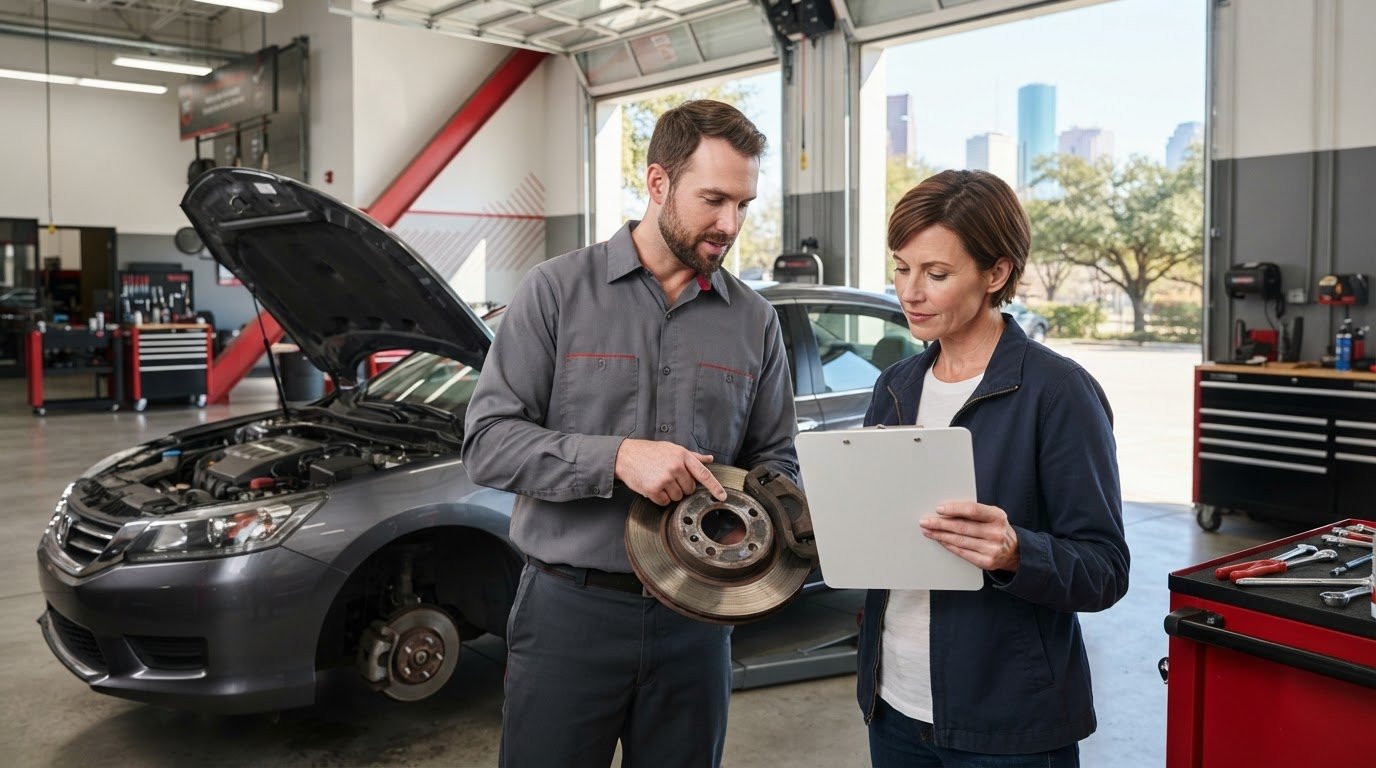
A car overheating diagnosis in Houston can turn a worrying symptom into a practical repair plan. Share details you’ve noticed, such as when the warning appears and whether it followed an impact. This context helps connect the concern to the right kind of service.
Fix My Car offers mechanical work, collision repair, and air conditioner and heater repair. These services can help when overheating symptoms occur alongside mechanical issues, collision damage, or problems with cabin heating and cooling. Describe what your vehicle is doing to discuss the repair it needs.
Clear information helps start that conversation: note any warning lights, changes during driving, or related damage. Contact Fix My Car to discuss your vehicle’s repair needs and move toward a considered next step.
Frequently Asked Questions
Can I just add coolant and keep driving?
Adding coolant can restore the level, but it doesn’t establish that the vehicle is safe to drive. If the temperature warning returns, coolant keeps disappearing, or steam appears, stop driving and arrange an inspection. In Houston traffic, frequent stops can make a developing temperature problem more noticeable. Never remove a radiator cap while the engine is hot.
Does It Matter What Type of Coolant Is Used?
Yes. Use coolant that matches your vehicle manufacturer’s specifications, rather than choosing by color alone. Different coolant types may not be compatible, and mixing incompatible fluids can create sludge that restricts passages and accelerates corrosion. Check the owner’s manual for the required type. If you don’t know what’s already in the system, avoid mixing products until you identify the existing coolant.
What causes a car to overheat?
A car overheats when its cooling system can’t move or release enough heat. Causes include coolant loss, a malfunctioning cooling fan, a restricted radiator, or a thermostat that doesn’t regulate flow properly. A failed water pump or air trapped in the system can also disrupt circulation. Note whether the gauge rises at idle, on the highway, or in both situations; that pattern helps narrow down the possibilities.
What should I do if my car starts overheating?
Turn off the air conditioning and switch the heater to high; this can help draw heat away from the engine. If the gauge keeps climbing, pull over somewhere safe and turn off the engine. Don’t open the radiator cap while the engine is hot. Once the vehicle has cooled, look for visible leaks without touching hot components, then arrange a diagnosis before continuing your trip in Houston.
What are the common causes of car overheating?
Common causes include leaks from hoses or the radiator, a faulty thermostat, a failing water pump, and cooling-fan problems. A clogged radiator or contaminated coolant can also interfere with heat transfer. The symptom pattern provides useful clues: overheating mainly at idle differs from overheating on the highway. Track temperature changes and any coolant warning before arranging an inspection.
How can I diagnose an overheating car step by step?
Start by noting when the temperature rises and whether the vehicle is idling or moving. Turn off the air conditioning, use the heater, and stop safely if the gauge keeps climbing. After the engine cools, check the coolant reservoir level and look for visible leaks; don’t open a hot radiator cap. Record warning lights or unusual heater behavior for the technician’s inspection.
Comentarios