


Car Diagnostic Test Cost in Houston and What Affects It
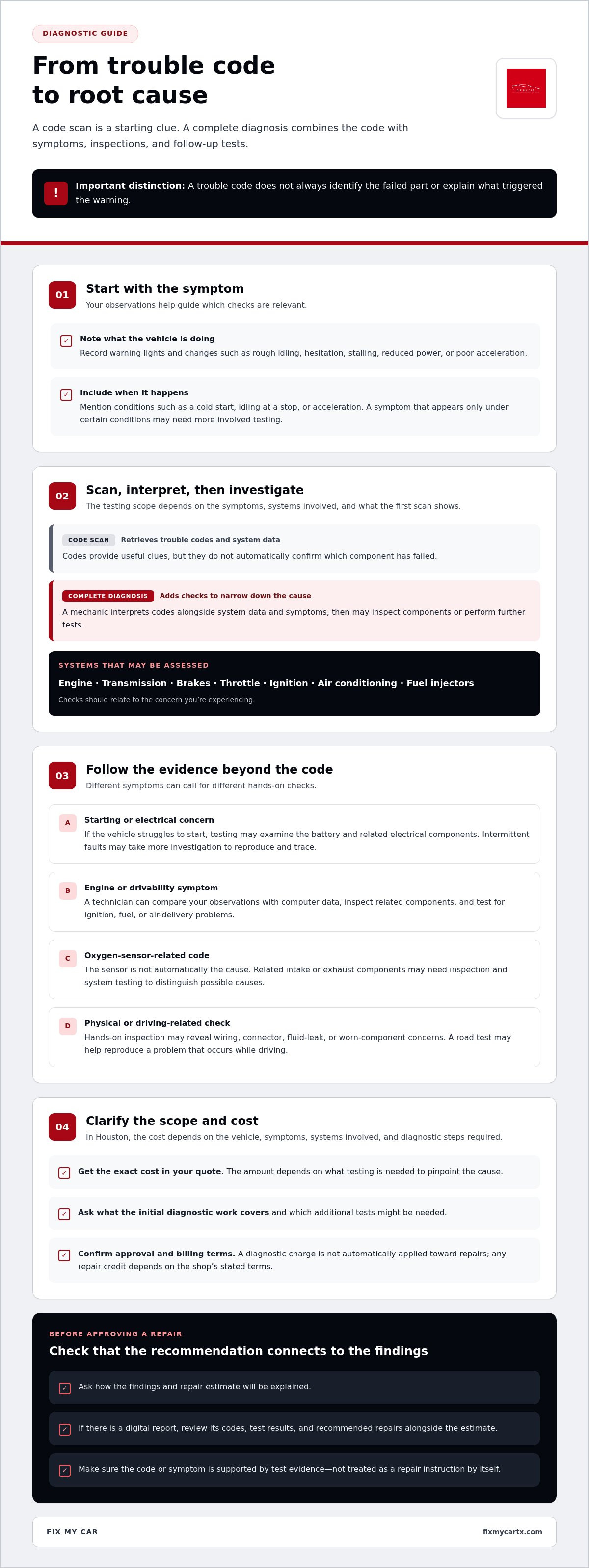
A straightforward fault may be identified quickly, while intermittent problems can take longer to trace through in-depth testing. The car diagnostic test cost in Houston depends partly on whether your vehicle needs a code scan or a fuller diagnosis to find the cause.
It’s understandable to want a clear idea of the time and expense before booking a test. A code scan can reveal stored trouble codes, but those codes don’t always identify the faulty part or explain what triggered the warning.
This guide explains what affects diagnostic testing, how a scan differs from a complete diagnosis, and why some problems take longer to trace. You’ll also learn what testing can involve, so you can understand the next step when a warning light or drivability concern appears.
Table of Contents
Is a code scan the same as a complete diagnosis?
A code scan retrieves trouble codes and system data; a complete diagnosis adds inspections and tests to identify the cause. Diagnostic costs depend on the problem’s complexity, the systems involved, and whether testing needs to go beyond the initial scan.
Vehicle Systems Checked
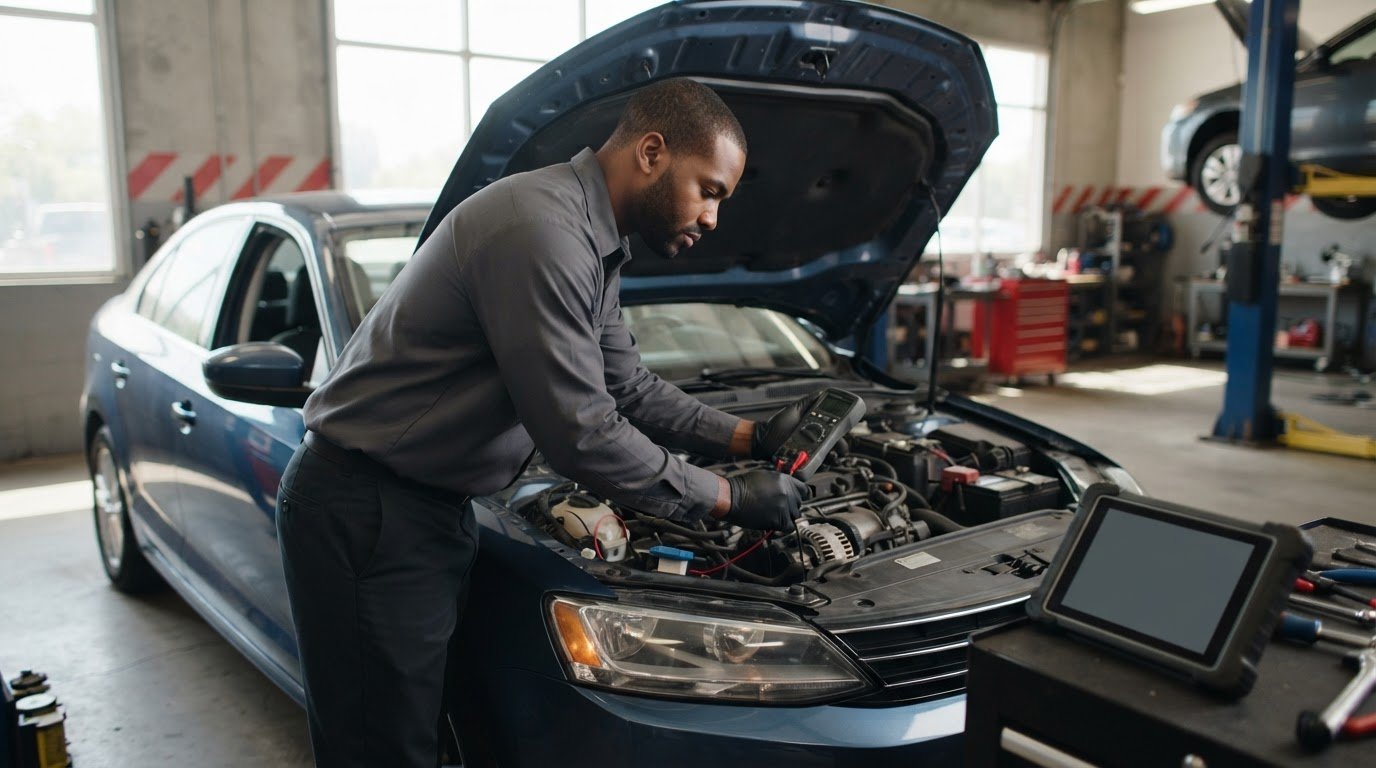
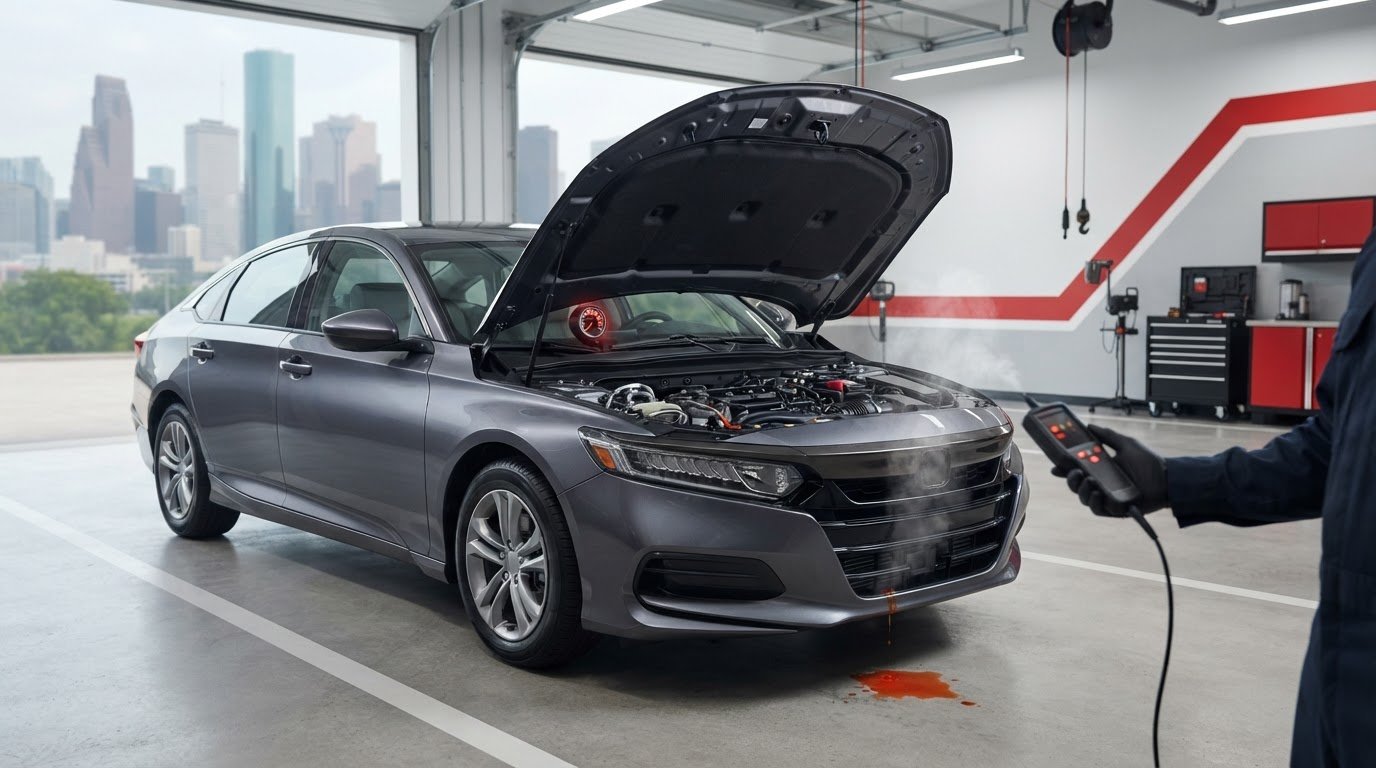
Diagnostic equipment connects to a vehicle’s onboard computer and retrieves information about detected problems. Depending on the symptoms, a mechanic may assess the engine, transmission, brakes, throttle, ignition, air conditioning, or fuel injectors. The checks should relate to what you’re experiencing, such as poor acceleration, a brake warning, or an air-conditioning problem.
Computer Diagnostics and System Analysis
A scan provides codes, but a code alone doesn’t identify the failed part or explain why the fault occurred. The Society of Automotive Engineers (SAE) stipulates alphanumeric diagnostic trouble codes. A mechanic interprets those codes alongside system data and your vehicle’s symptoms, then uses further tests to narrow down the cause.
Starting and electrical concerns can call for more than reading a code. If your vehicle struggles to start, testing may examine the battery and related electrical components. An intermittent problem can take more investigation because the mechanic may need to reproduce the symptom and trace its source. Battery Service addresses battery-related needs.
Exhaust and fuel concerns also require attention to the full system. For example, a trouble code connected with an oxygen sensor doesn’t automatically prove the sensor has failed. A technician may need to inspect related intake or exhaust components and test how the system operates. Those checks help distinguish a faulty sensor from another cause.
A scan can provide useful clues; a complete diagnosis connects them to your vehicle’s actual problem. The number of systems and follow-up tests required determines the scope of the work.
Engine and drivability diagnostics
A check engine light can signal an engine concern, but the warning alone doesn’t pinpoint the cause. Engine diagnostics connect the stored code with symptoms such as rough idling, hesitation, stalling, or reduced power. The car diagnostic test cost in Houston depends on which checks are needed to track the fault, including whether it appears consistently or intermittently.
Start by noting when the symptom occurs. Does the engine stumble during startup, idle unevenly at a stop, or hesitate during acceleration? These details help guide testing. A technician can compare your observations with computer data, inspect related components, and test for ignition, fuel, or air-delivery problems.
A trouble code is a clue, not a complete repair instruction. For example, a code associated with an oxygen sensor may point to a possible intake or exhaust leak rather than a failed sensor. Testing the surrounding system helps pinpoint the cause before a repair is chosen. The same principle applies when poor acceleration or rough running accompanies a warning light.
Record the warning light, changes in engine behavior, and conditions around the event, such as a cold start or acceleration. Share those observations during diagnosis. A symptom that occurs only under specific operating conditions may need more involved testing than a fault that appears consistently. Intermittent electrical or engine problems can also take additional investigation.
Maintenance timing can help identify concerns early. Guidance recommends scheduling engine checks and full auto diagnostic testing annually and twice a year with qualified technicians. Follow your vehicle owner’s manual for its maintenance schedule, and treat a new drivability symptom as useful diagnostic information rather than relying on a code alone.
For persistent rough running or stalling, mechanical repair for engine concerns can be the next step after identifying the cause.
How long does a car diagnostic test usually take?
A straightforward fault may be identified quickly, but intermittent trouble can take longer to trace. Physical inspection, advanced testing, and a road test can add steps, especially when a symptom appears only under certain driving conditions.
In Houston, diagnostic costs depend on your vehicle’s symptoms, the systems involved, and how much testing is needed to pinpoint the cause. Your quote gives the exact cost for your case.
A diagnostic charge isn’t automatically applied toward repairs. Whether it becomes a repair credit depends on the shop’s stated billing terms, so distinguish the diagnostic charge from the repair estimate.
Ask what the initial diagnostic work covers, which additional tests might be needed, and whether you’ll approve those steps before they begin. Also ask how the findings and repair estimate will be explained. These details clarify what you’re authorizing and how the diagnosis informs the recommended work.
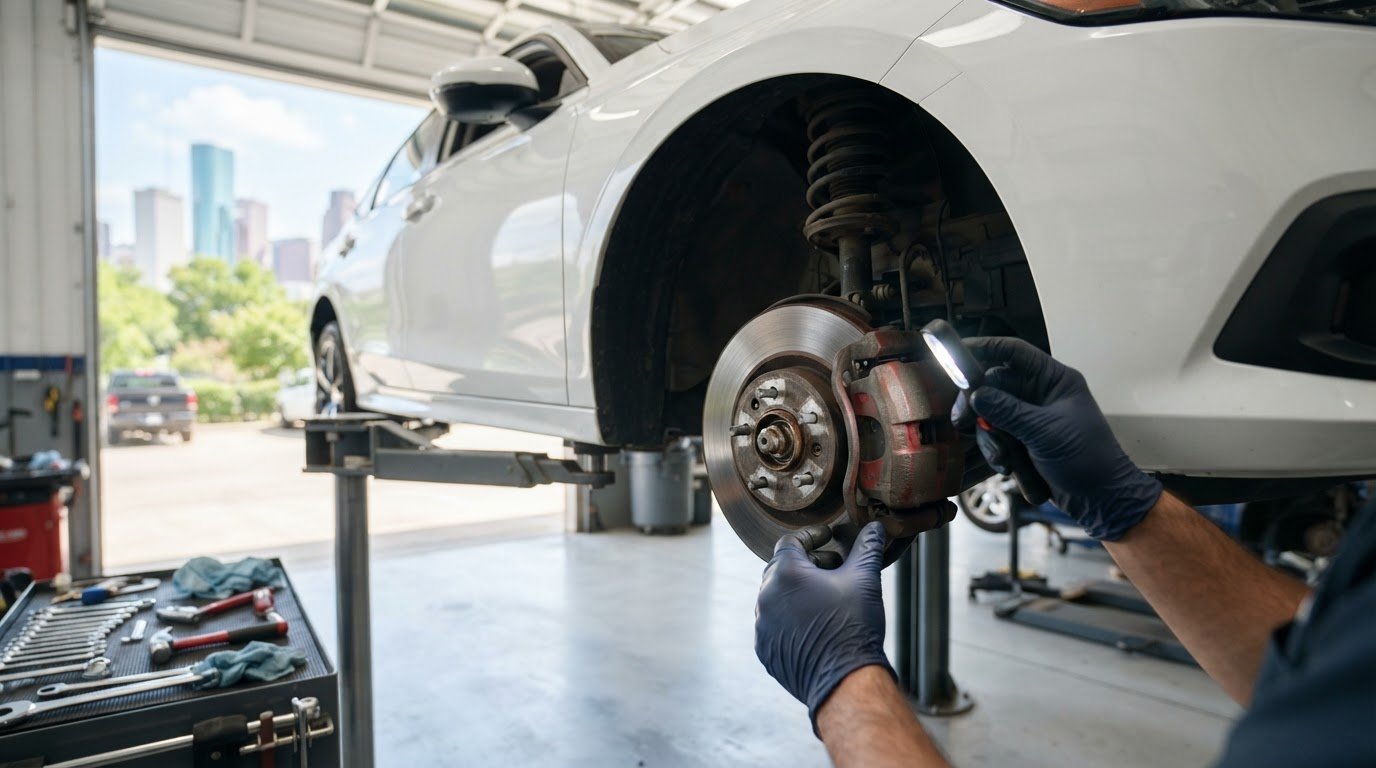
A scan can guide the next inspection, but hands-on checks can reveal physical causes that computer data alone cannot pinpoint. A mechanic may examine wiring, connectors, fluid leaks, or worn components. If the trouble happens while driving, a road test can help reproduce it and observe engine, transmission, or braking behavior under operating conditions.
A diagnostic inspection differs from a state inspection because it investigates a reported problem; it isn’t simply a general compliance check. Ask whether the work includes a physical inspection or road test, and what findings will be documented. If you receive a digital report, review its codes, test results, and recommended repairs alongside the estimate. Before approving repairs, make sure the code or symptom connects to supporting evidence.
Automotive diagnostic testing in Houston
In Houston, diagnostic work can range from retrieving computer codes to testing a specific mechanical concern. The car diagnostic test cost depends on the vehicle, symptoms, systems involved, and diagnostic steps required. Your quote gives the exact cost for your case.
Dealership charges depend on the vehicle and the scope of testing. A diagnostic quote should identify what the initial work covers and explain any additional tests before they begin.
An auto-parts-store code scan retrieves trouble codes and system data, but it doesn’t identify the cause by itself. A complete diagnosis involves further inspection and testing, so a scan and diagnostic work aren’t interchangeable.
To assess whether a diagnostic process is clear and thorough, focus on its steps and findings. A useful explanation connects your concern to test results, then distinguishes diagnosis from repair work. For example, a warning code should be interpreted alongside symptoms and relevant inspection results, not treated as automatic proof that a particular part needs replacement.
Before approving diagnostic work, ask what the initial test includes, what could prompt additional testing, and how you’ll receive the findings. Clarify how the estimate separates diagnosis from recommended repairs. These questions help you understand the scope and make an informed decision without confusing a code scan with a complete evaluation.
Houston driving conditions can shape the symptoms a technician investigates. If a concern appears during stop-and-go traffic, note when it happens, such as after repeated stops or during acceleration. If the vehicle behaves differently on a longer drive, share that detail too. Specific observations can help technicians focus testing on the conditions tied to your complaint.
Periodic full diagnostic sweeps can help identify potential concerns before they become more serious problems. For an unresolved mechanical concern, choose a diagnostic process that explains what was tested and how the findings support the recommended repair.
There is no single set cost; the price depends on the vehicle, symptoms, systems, and testing needed. Request a quote for your specific concern.
Dealership diagnostic charges vary with the vehicle and scope of testing. Ask for a quote that explains the initial work and any additional tests.
Fix My Car: Collision Repair
Fix My Car is a next step when diagnosis points to a repair, not just a code. Its Mechanical Work can address diagnosed vehicle concerns, while Collision Repair is relevant when collision damage needs attention. If testing identifies a brake or climate-control problem, the shop also handles Brakes Repair and Air Conditioner and Heater Repair.
Share the symptoms you noticed and the diagnostic findings, such as a warning light or a fault that occurs during acceleration. That context helps connect the test results with the repair need. For collision damage, describe the affected areas and how the vehicle is behaving.
Contact Fix My Car or visit fixmycartx.com to discuss the next step.
Take the Next Step With Confidence
Use your diagnostic findings to guide a practical decision, not as a reason to approve every suggested repair automatically. Ask how the recommended work addresses your concern and whether the explanation connects clearly to the test results. This gives you a useful basis for weighing the car diagnostic test cost in Houston against the work your vehicle may need.
Once the issue is identified, Fix My Car can help with the next repair step through Mechanical Work. Collision Repair and Air Conditioner and Heater Repair are also available when those needs relate to your vehicle’s condition. The right path depends on the problem the diagnosis identifies.
Share your symptoms and diagnostic findings with the team to discuss what comes next. Contact Fix My Car about diagnostics, and move forward with a clearer understanding of your repair options.
Frequently Asked Questions
Can you diagnose problems without a warning light?
Yes. A vehicle can have a mechanical, electrical, or drivability problem without a warning light. For example, a vibration while braking or a heater that blows cool air can still be investigated through symptom-based checks. Note when the issue happens, what changes it, and whether it affects starting, handling, or comfort. Those details help focus the inspection.
Why does the diagnostic fee apply if I know the code?
A code identifies a system or condition that needs attention, but it doesn’t prove which component caused it. Diagnosis involves interpreting that code alongside your vehicle’s behavior and test results. For instance, the same warning may lead to checks of related wiring or components before a repair is recommended. The fee covers investigative work, not simply obtaining a code.
What is included in a standard car diagnostic test?
There isn’t one universal package called a standard diagnostic test. The work typically starts with discussing the symptom and retrieving available vehicle data, then may include targeted inspections or tests related to the complaint. A battery-related starting issue, for example, calls for different checks than an air-conditioning concern. Ask what the test covers and how the findings will be reported.
Do Houston auto repair shops charge a separate diagnostic fee?
Diagnostic work may appear as a separate charge from repair labor on a Houston repair estimate. The billing arrangement depends on the work being performed, so review the estimate for separate diagnostic and repair lines. Before authorizing work, understand what the diagnostic charge covers and whether additional testing requires approval. That makes it easier to compare the scope of estimates.
How much does an engine light or OBD-II diagnostic scan cost in Houston?
The cost of an engine-light or OBD-II diagnostic scan in Houston depends on whether you need code retrieval alone or further testing to investigate the cause. Vehicle symptoms, access to affected systems, and the complexity of the fault influence the work involved. A case-specific quote should distinguish the scan from deeper diagnosis or repair labor.
How long does a car diagnostic test take?
Timing depends on whether the reported problem appears consistently and can be reproduced during testing. A warning that stays on may give a technician a clear starting point; an intermittent stall that happens only after driving can require more investigation. Describe when the trouble occurs and what the vehicle was doing. That context helps shape the diagnostic process.
Comentarios